Original pastel on hand made bark paper from the Ancient Earth Series by Cecilia Henle
24.00 X 78.00"
Original Pastel Painted on bark paper, or "Amat" hand-made by the Otomi Tribes of NM.
I purchase this gorgeous paper directly from them.
>>>FRAMED in hand made wooden frame, and light-weight plexi for shipping, and shadow-box floated on suede mat<<<
Petroglyph/Rock Art/Cave Art
The Story:
Spaniards & Navajos is a story of the entry by Spanish conquerors into the lands that the Navajo were living in.
Don Francisco Vásquez de Coronado, Spanish Explorer, leads an expedition of soldiers from Mexico into the American southwest in search of gold.
They arrive and discover the Hopis during the summer of 1540, where Navajos were already living in the Hopi province.
The first recorded contact between Navajos and the Spanish invaders came in 1583 in the area of Dinetah.
When the Spaniards arrived in the Southwest, they brought with them domestic animals such as cows, horses, and sheep.
(They also brought with them guns and tools, which were all new to the Indians.)
The Navajo quickly became excellent horsemen, and a new way of life was begun.
By 1776, the region lying between the Rio Grande Pueblos and the Hopi village was known to the Spaniards as “Providence of the Navajos”.
By this time, the Navajos had acquired thousands of sheep and horses they were more mobile and they could farm to a greater extent while their tribe was growing in number.
Original pastel on hand made bark paper from the Ancient Earth Series by Cecilia Henle
24.00 X 78.00"
Original Pastel Painted on bark paper, or "Amat" hand-made by the Otomi Tribes of NM.
I purchase this gorgeous paper directly from them.
>>>FRAMED in hand made wooden frame, and light-weight plexi for shipping, and shadow-box floated on suede mat<<<
Petroglyph/Rock Art/Cave Art
The Story:
Spaniards & Navajos is a story of the entry by Spanish conquerors into the lands that the Navajo were living in.
Don Francisco Vásquez de Coronado, Spanish Explorer, leads an expedition of soldiers from Mexico into the American southwest in search of gold.
They arrive and discover the Hopis during the summer of 1540, where Navajos were already living in the Hopi province.
The first recorded contact between Navajos and the Spanish invaders came in 1583 in the area of Dinetah.
When the Spaniards arrived in the Southwest, they brought with them domestic animals such as cows, horses, and sheep.
(They also brought with them guns and tools, which were all new to the Indians.)
The Navajo quickly became excellent horsemen, and a new way of life was begun.
By 1776, the region lying between the Rio Grande Pueblos and the Hopi village was known to the Spaniards as “Providence of the Navajos”.
By this time, the Navajos had acquired thousands of sheep and horses they were more mobile and they could farm to a greater extent while their tribe was growing in number.


 Image 1 of 8
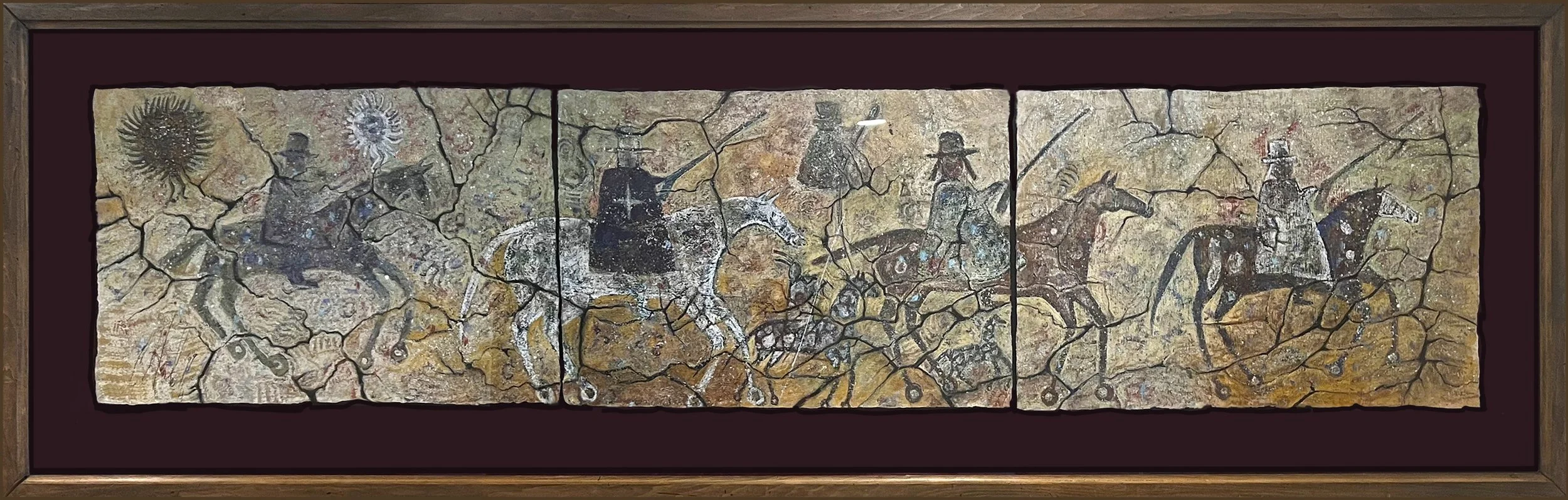 Image 2 of 8
 Image 3 of 8
 Image 4 of 8
 Image 5 of 8
 Image 6 of 8
 Image 7 of 8
 Image 8 of 8